

Blockchain technology demystified, it's fundamentally a network of computers working together to manage and verify data in a secure and transparent way. It's based on a ledger that records transactions, making it a permanent and unalterable record. This ledger is distributed across the network and accessible to anyone with permission, allowing for widespread transparency. Transactions are verified by the network and linked through cryptography, creating a permanent chain. But, that's not all – blockchain technology has many layers, and its true potential and capabilities will become more apparent as we take a closer look at its inner workings.
Understanding Blockchain Basics
The blockchain terrain can seem intimidating for non-tech users, but grasping the fundamentals is easier than it sounds. At its core, blockchain is about decentralization – a network of computers working together to manage and verify data, rather than relying on a single central authority. This decentralized approach provides a level of security and transparency, as data is recorded and verified by multiple sources.
One key concept in blockchain basics is the ledger – a permanent and unalterable record of transactions. This ledger is maintained by the network of computers, rather than a single entity, which helps ensure transparency and accountability. When a new transaction is made, it is verified by the network and added to the ledger, creating a permanent and tamper-proof record.
Understanding these basic concepts of decentralization and transparency is crucial for comprehending the capability and potential of blockchain. By recognizing how blockchain functions, non-tech users can begin to see the benefits and possibilities it offers. As they explore deeper into the realm of blockchain, they'll find it's not as complex as it initially seems.
What Is Blockchain Technology
With the basics of blockchain under their belt, non-tech users can now explore deeper into the technology itself. At its core, blockchain technology is a decentralized ledger that records transactions across a network of computers. This ledger isn't stored in one place; instead, it's distributed across all the computers on the network, making it accessible to anyone with permission.
The key feature of blockchain is its ability to create immutable transaction records. This means that once a transaction is recorded on the ledger, it cannot be altered or deleted. The transactions are linked together through cryptography, creating a permanent and unalterable chain of records. This makes blockchain an attractive solution for applications that require transparency, accountability, and security.
Blockchain technology can be used for a wide range of applications, from digital payments and supply chain management to voting systems and identity verification. Its decentralized and immutable nature makes it a reliable and trustworthy solution for storing and sharing data. By comprehending what blockchain technology is and how it works, non-tech users can begin to see its potential applications and benefits.
How Blockchain Works
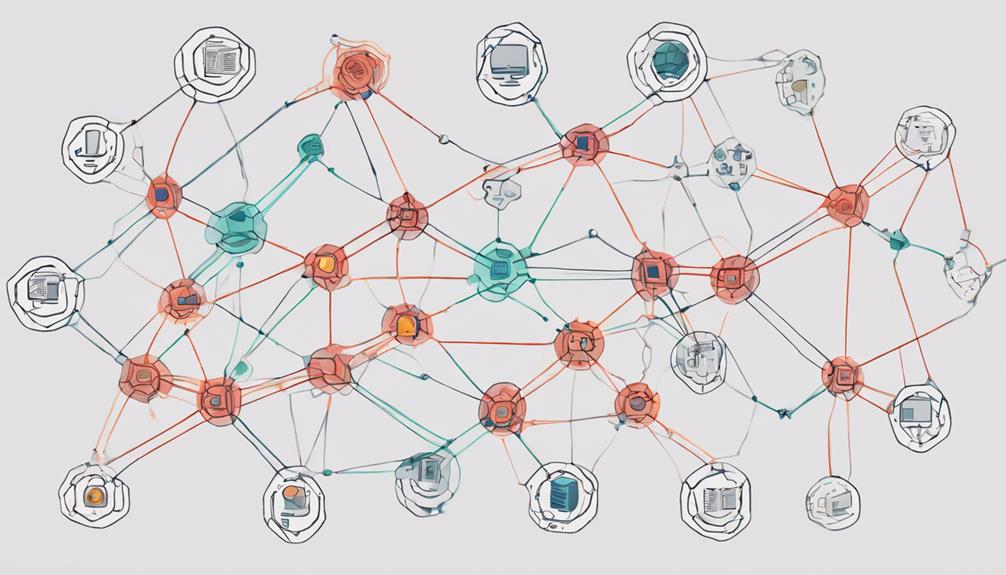
Having grasped the basics of blockchain, it's now clear that this decentralized ledger is more than just a concept – it's a complex system with its own mechanisms for recording and verifying transactions. At its core, blockchain is built on distributed ledger technology, which enables multiple parties to record and verify transactions without the need for a central authority. This is achieved through a network of computers that work together to validate transactions and create a permanent, tamper-proof record.
The verification process is made possible by a consensus algorithm, which guarantees that all parties on the network agree on the state of the ledger. Consensus algorithm optimization is essential in achieving high levels of security and scalability. This optimization process involves fine-tuning the algorithm to minimize energy consumption, reduce latency, and increase the number of transactions that can be processed per second.
Once a transaction is verified, it's combined with other transactions in a batch called a block. Each block is then added to the ledger, creating a permanent and unalterable record of all transactions that have taken place on the network.
Types of Blockchain Networks
Blockchain technology supports various network types, each serving different purposes and catering to different user needs. A blockchain network can be public, private, or a mix of both, with consortium networks being a hybrid model. Comprehending these types is critical to grasp how blockchain technology can be applied in different contexts, from open-source projects to enterprise solutions.
Public Blockchain Networks
Public blockchain networks are fundamentally open-source systems that allow anyone to join and participate, making them the most decentralized type of blockchain. This openness enables users to create decentralized applications that operate on the network, free from the control of a single entity. It's a key characteristic of public blockchain networks, as it promotes transparency, security, and trust among participants.
In a public blockchain network, every transaction is recorded on a public ledger, allowing for transparent record keeping. This guarantees that all participants can view the entire history of transactions, making it difficult for any single entity to manipulate the data. The decentralized nature of public blockchain networks also permits participants to validate transactions without the need for intermediaries, such as banks or governments.
The use of public blockchain networks has given rise to various decentralized applications, including cryptocurrencies like Bitcoin and Ethereum. These applications operate on a peer-to-peer network, allowing users to interact with each other directly, without the need for intermediaries. Overall, public blockchain networks provide a secure, transparent, and decentralized environment for users to create and interact with various applications.
Private Blockchain Networks
Organizations looking for more control over their network often turn to private blockchain networks, which restrict access to a select group of participants. This type of network is ideal for businesses or institutions that want to utilize the benefits of blockchain technology without exposing their data to the public. Private blockchain networks operate on a distributed ledger architecture, allowing multiple parties to access and update the network while maintaining a secure and transparent record of transactions.
Private blockchain networks employ blockchain consensus protocols to validate transactions and safeguard the integrity of the network. These protocols can be customized to fit the specific needs of the organization, allowing for greater control and flexibility. By limiting access to authorized users, private blockchain networks can also reduce the risk of cyber attacks and data breaches.
Private blockchain networks are often used for internal purposes, such as supply chain management or internal transactions. They can also be used to facilitate communication and collaboration between different departments or divisions within an organization. Overall, private blockchain networks offer a secure and customizable solution for organizations looking to leverage the benefits of blockchain technology.
Consortium Blockchain Networks
Consortium Blockchain Networks
Collaboration is key in the development of consortium blockchain networks, which bring together multiple organizations to achieve a common goal. These networks combine the benefits of public and private blockchains, offering a decentralized governance model that suits the needs of various industries. A consortium blockchain network is typically controlled by a group of pre-selected nodes, which can be organizations or companies.
This type of network is particularly useful for industries that require collaboration and data sharing between different entities. For instance:
- Banking and finance: Consortium blockchains can facilitate secure and efficient transactions between financial institutions.
- Supply chain management: Multiple organizations can track and verify the movement of goods and products.
- Healthcare: Secure sharing of medical records and research data between hospitals and research institutions.
- Government institutions: Collaboration on public projects and sharing of sensitive information.
However, consortium blockchain networks also face scalability concerns, as the complexity of the network can slow down transaction processing times. Nonetheless, the benefits of decentralized governance and collaboration make consortium blockchain networks an appealing solution for many industries.
Blockchain Security Measures

Blockchain security is a multilayered approach that protects users' data and the integrity of the network. Two key components of blockchain security measures are data encryption methods, which safeguard users' sensitive information, and consensus mechanism types, which validate transactions on the network. By comprehending these components, users can better appreciate the robust security features that underpin blockchain technology.
Data Encryption Methods
As data becomes increasingly valuable, it's essential that it's stored and transmitted securely – which is where data encryption methods come into play. In the context of blockchain technology, data encryption methods play a pivotal role in ensuring the integrity and confidentiality of data.
Decentralized encryption methods are used in blockchain to protect data from unauthorized access. These methods involve encrypting data at the point of origin, before it's transmitted to the blockchain network. This approach guarantees that even if data is intercepted during transmission, it can't be read or tampered with.
Data integrity protocols are also employed to ensure that data isn't altered during transmission or storage. These protocols involve generating a unique digital fingerprint, known as a hash, which is used to verify the integrity of data.
Examples of data encryption methods used in blockchain include:
- Public-key cryptography: uses a pair of keys to encrypt and decrypt data.
- Symmetric-key cryptography: uses the same key to encrypt and decrypt data.
- Hash functions: generates a unique digital fingerprint to verify data integrity.
- Zero-knowledge proofs: enables the verification of data without revealing the underlying data.
Consensus Mechanism Types
To verify the integrity and security of a blockchain network, a consensus mechanism is implemented. This mechanism allows nodes on the network to agree on the state of the blockchain, preventing any single node from manipulating the data. There are several types of consensus mechanisms, but two of the most popular ones are Proof of Work (PoW) and Proof of Stake (PoS).
Proof of Work is the original consensus mechanism used by Bitcoin. It requires nodes to solve complex mathematical problems to validate transactions and create new blocks. This process is energy-intensive and requires significant computational resources. Conversely, Proof of Stake is a more energy-efficient mechanism that requires nodes to "stake" their own cryptocurrency to participate in the validation process. The node with the largest stake has the highest chance of validating transactions and creating new blocks. Both PoW and PoS have their advantages and disadvantages, but they both serve the same purpose: to verify the security and integrity of the blockchain network. By implementing a consensus mechanism, blockchain networks can maintain trust and prevent malicious activity.
Benefits of Blockchain Technology
Accessing the full potential of digital transactions, they're built on trust and transparency – fundamental qualities that blockchain technology brings to the forefront. By utilizing a decentralized, distributed ledger, blockchain technology facilitates secure, efficient, and transparent transactions. One of the primary advantages of this technology is the increased transparency it provides, allowing users to track transactions in real-time and verify their genuineness.
The benefits of blockchain technology can be broken down into several key areas:
- Reduced transaction costs: By eliminating intermediaries, blockchain technology considerably lowers transaction costs and processing times.
- Improved security: The decentralized nature of blockchain makes it more difficult for hackers to manipulate data, guaranteeing a secure and trustworthy environment.
- Increased efficiency: Automation and smart contracts streamline processes, reducing the need for manual intervention and increasing overall efficiency.
- Enhanced auditability: The transparent and immutable nature of blockchain technology ensures a clear audit trail, making it easier to track and verify transactions.
Real-Life Applications of Blockchain

Blockchain technology's benefits, particularly with respect to transparency, security, and efficiency, have far-reaching implications for various industries. Its decentralized data storage capabilities make it an alluring solution for organizations seeking to securely store sensitive information. For instance, blockchain-based systems can be used to store medical records, allowing patients to control access to their personal data while safeguarding its integrity.
The transparent transactions enabled by blockchain technology have also led to its adoption in the supply chain management sector. Companies can use blockchain to track the movement of goods, reducing the risk of counterfeiting and increasing accountability. This increased transparency also benefits consumers, who can access information about the origin and movement of products.
Moreover, blockchain technology is being used in voting systems to guarantee the integrity of elections. By using a blockchain-based system, votes can be securely recorded and counted, reducing the risk of tampering. These real-life applications demonstrate the potential of blockchain technology to transform various industries and improve the way we live and work.
Blockchain in Everyday Life
Blockchain technology is increasingly becoming an integral part of everyday life, transforming various sectors that people interact with on a daily basis. It's being used in banking and finance to secure transactions, in supply chain management to track the movement of goods, and in digital identity verification to protect personal data. From making online payments to verifying product authenticity, blockchain's impact is becoming more visible and widespread.
Banking and Finance
Financial transactions are the backbone of modern life, and they’re about to get a whole lot more secure and efficient. Blockchain technology is revolutionizing the banking and finance sector by providing a secure, transparent, and decentralized system for transactions. This technology has the potential to disrupt traditional banking systems and provide new opportunities for financial inclusion. By eliminating intermediaries and reducing the risk of fraud, blockchain in financial transactions enhances trust and security for both individuals and institutions. Additionally, the decentralized nature of blockchain ensures that records are immutable and easily verifiable, streamlining processes such as cross-border payments and smart contracts. As adoption grows, blockchain in financial transactions is expected to drive greater efficiency and innovation across the global economy.
Blockchain technology is being used in various aspects of banking and finance, including:
- Cryptocurrency trading: Blockchain technology enables secure and transparent cryptocurrency trading, allowing for fast and efficient transactions.
- Digital asset management: Blockchain-based digital asset management systems provide secure and transparent management of digital assets.
- Cross-border payments: Blockchain technology enables fast and secure cross-border payments, reducing the need for intermediaries.
- Identity verification: Blockchain-based identity verification systems provide secure and efficient identity verification for financial transactions.
The use of blockchain technology in banking and finance has the potential to increase efficiency, reduce costs, and improve security. As the technology continues to evolve, it's likely that we'll see even more innovative applications in the banking and finance sector.
Supply Chain Management
The global supply chain is a complex network of manufacturers, distributors, and retailers, and it's about to get a whole lot more efficient and transparent. Blockchain technology is being increasingly used in supply chain management to increase trust and accountability. By leveraging blockchain's distributed ledger technology, companies can guarantee the authenticity and provenance of their products.
One of the key applications of blockchain in supply chain management is asset tracking. This involves using unique identifiers and timestamps to track the movement of goods throughout the supply chain. This information is then recorded on a blockchain, creating an unchangeable record that can be accessed by all parties involved. This level of supply chain transparency can help companies to identify bottlenecks and inefficiencies, in addition to reduce the risk of counterfeiting and theft.
Digital Identity Verification
Millions of people around the world struggle with identity verification every day, and this issue is particularly prevalent in developing countries. Blockchain technology offers a potential solution through digital identity verification. This concept involves creating a secure and decentralized digital identity for individuals, allowing them to control their personal information and manage how it's shared.
In a blockchain-based system, individuals can store their identity documents and credentials in a digital wallet, which is protected by advanced cryptography. This approach provides robust digital identity protection and guarantees that sensitive information is not stored in a single, vulnerable location.
Distributed identity management is another key aspect of blockchain-based identity verification. It enables individuals to manage their identities across multiple platforms and services, without relying on centralized authorities. Here are some benefits of blockchain-based identity verification:
- Improved security: Blockchain-based identity verification provides robust protection against identity theft and unauthorized access.
- Increased control: Individuals have full control over their personal information and can manage how it's shared.
- Enhanced transparency: Blockchain technology provides a transparent and tamper-proof record of all transactions and interactions.
- Reduced costs: Blockchain-based identity verification can reduce the costs associated with traditional identity verification methods.
Common Blockchain Misconceptions

Numerous misconceptions surround blockchain technology, often shrouding it in mystery and deterring potential users. One common blockchain myth is that blockchain and Bitcoin are interchangeable terms. However, blockchain technology is a broader concept that encompasses various applications, including supply chain management and digital identity verification, whereas Bitcoin is a specific cryptocurrency that utilizes blockchain technology.
Common blockchain fallacies also include the notion that blockchain is completely secure and hack-proof. While blockchain technology is secure due to its decentralized and immutable nature, it's not entirely foolproof. Cybersecurity threats can still occur if the underlying code or smart contracts contain vulnerabilities.
Another misconception is that blockchain technology is only for tech-savvy individuals. Yet, many blockchain applications are designed to be user-friendly, with intuitive interfaces and step-by-step instructions. This makes it accessible to people from diverse backgrounds and skill levels. By dispelling these common blockchain misconceptions, individuals can gain a better appreciation of the technology and its potential applications, ultimately realizing its full potential.
The Future of Blockchain
Blockchain's potential for growth and innovation is vast, and its future looks promising. As the technology advances, it's expected to play a significant role in shaping various industries, from finance to healthcare. One area that's gaining significant attention is decentralized finance (DeFi), which leverages blockchain to provide secure and transparent financial services.
Some potential applications of blockchain technology in the future include:
- Increased adoption of cryptocurrency investment: As more people become aware of the benefits of cryptocurrency, it's likely that investment in this area will continue to grow.
- Improved security measures: Advancements in blockchain technology will lead to more robust security measures, making it even harder for hackers to breach the system.
- Regulatory clarity: Governments and regulatory bodies are expected to provide clearer guidelines on the use of blockchain technology, which will help to build trust and confidence in the system.
- Mainstream acceptance: Blockchain technology is likely to become more mainstream, with more businesses and individuals using it as a secure and efficient way to conduct transactions.
Frequently Asked Questions
Can Blockchain Technology Be Used for Voting Systems?
Visualize a world where voting lines stretch for miles, only to find out your vote wasn't counted. Fortunately, that's not our reality. Blockchain technology can transform voting systems by creating blockchain-enabled voting platforms that guarantee transparency and security. Digitized voting records can be stored, making it nearly impossible to tamper with or alter votes. This technology can increase voter trust and participation, potentially changing the face of democracy as we comprehend it.
How Do Blockchain Transactions Affect the Environment?
She knows that blockchain transactions have raised concerns about their environmental impact. The process of validating transactions, called mining, requires significant energy consumption, contributing to greenhouse gas emissions. Nonetheless, researchers are exploring ways to reduce blockchain's carbon footprint. They're working on energy efficiency improvements, such as more efficient consensus algorithms and the use of renewable energy sources, to minimize the environmental effects of blockchain transactions and make them more sustainable.
Can Blockchain Be Hacked Through Quantum Computers?
"An ounce of prevention is worth a pound of cure." In the case of blockchain security, this adage holds true. Some worry that blockchain can be hacked through quantum computers, but experts say that's unlikely. Quantum computer attacks are a concern, but blockchain security measures are being developed to stay ahead. For instance, quantum-resistant algorithms and multi-party computation can protect against potential threats. These measures guarantee blockchain remains secure, even in the face of emerging technologies.
Are Blockchain Networks Compatible With Existing Systems?
She explores the integration of blockchain networks with existing systems. Compatibility is key to widespread adoption, but it's often hindered by scalability concerns. Many blockchain networks struggle to process high volumes of transactions efficiently, which can lead to bottlenecks and delays. Furthermore, regulatory compliance is a major hurdle, as blockchain networks must adhere to existing laws and regulations. Conversely, some blockchain platforms are designed with interoperability in mind, making integration easier.
Can Individuals Create Their Own Blockchain Network?
"Where there's a will, there's a way" holds true in the realm of blockchain. Individuals can indeed create their own blockchain network, giving them control over decentralized blockchain applications. This self-made network enables them to manage assets autonomously through blockchain-based asset management. While it requires technical expertise, creating a blockchain network allows individuals to build custom systems personalized to their specific needs, promoting innovation and flexibility in diverse industries.