

Virtual reality is growing beyond gaming, transforming industries and redefining interactions. It's being used in education to improve student engagement, in healthcare for pain management and rehabilitation, and in architecture to create immersive digital environments. VR is likewise being integrated with emerging technologies like 5G and AI, and its use cases are widening into e-commerce, real estate, and manufacturing. Advancements in VR hardware are making it more accessible and affordable, driving mainstream adoption. As VR technology continues to develop, its applications and possibilities are likely to multiply, opening up new and uncharted territories of innovation and exploration await.
Virtual Reality in Gaming
In the domain of gaming, Virtual Reality (VR) is transforming the manner in which individuals experience and engage with their preferred games. Advances in VR technology have led to the creation of immersive experiences that simulate real-world environments. This shift has sparked a surge in VR game development, with developers racing to create engaging and interactive games.
One key area of focus in VR game development is the creation of multiplayer VR experiences. These experiences allow players to interact with each other in real-time, creating a sense of community and social interaction. Multiplayer VR experiences are particularly popular in games that involve team-based gameplay, such as first-person shooters and strategy games. The ability to communicate and coordinate with teammates in a virtual environment amplifies the overall gaming experience.
The growth of VR gaming has also led to the development of specialized hardware, such as VR headsets and controllers. These devices provide players with a more immersive experience, allowing them to fully engage with the virtual world.
VR in Education and Training
Educators' increasing interest in Virtual Reality has led to its integration into various educational settings. This shift is driven by the potential of VR to provide students with enhanced student engagement and immersive learning experiences. By leveraging VR technology, educators can create interactive and dynamic lessons that cater to different learning styles.
In the classroom, VR can be used to transport students to historical sites, explore the human body, or visit distant planets. This immersive approach to learning helps students to better retain information and develop a deeper understanding of complex concepts. Additionally, VR can facilitate hands-on training in fields such as engineering, architecture, and the arts, allowing students to practice and experiment in a safe and controlled environment.
The use of VR in education and training also extends to professional development. Corporate trainers can use VR to simulate real-world scenarios, enabling employees to practice and refine their skills in a risk-free setting. In total, the integration of VR in education and training has the potential to transform the way we learn and acquire new skills.
Healthcare Applications of VR
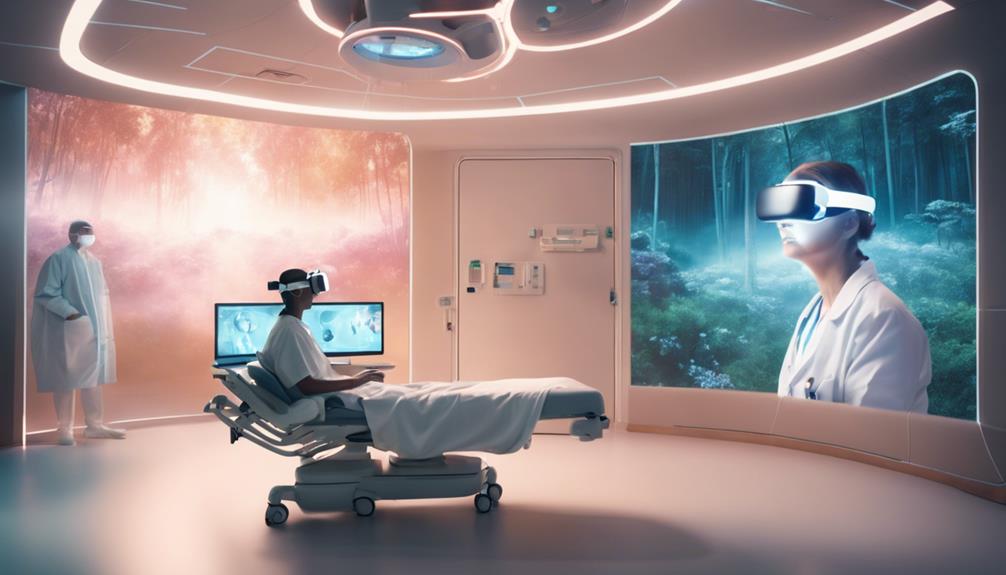
Healthcare Applications of VR
Advancements in Virtual Reality technology have opened up new avenues for its application in the healthcare sector. It's now being used in various ways to improve patient care and outcomes. One of the most significant applications is in remote patient monitoring. VR technology allows healthcare professionals to monitor patients distantly, reducing the need for hospital visits and enhancing patient engagement.
| Application | Description | Benefits |
|---|---|---|
| Pain Management | VR is used to distract patients from pain, reducing the need for pain medication. | Reduced pain levels, decreased medication use |
| Rehabilitation | VR is used to create immersive environments for physical therapy, improving patient engagement and outcomes. | Improved mobility, increased patient motivation |
| Medical Training | VR is used to simulate surgeries and other medical procedures, improving the skills and confidence of healthcare professionals. | Improved surgical skills, reduced errors |
The use of VR in healthcare also extends to pain management solutions. Studies have shown that VR can reduce pain levels by up to 50% in some patients. This technology has the potential to transform the way we approach patient care and treatment.
The Future of VR Entertainment
Virtual reality's mainstream breakthrough has catapulted it into the entertainment spotlight, revolutionizing the way people consume and interact with media. As VR technology advances, the possibilities for immersive entertainment experiences continue to expand. One of the most exciting developments in this space is the rise of interactive virtual concerts, where fans can connect with their favorite artists in entirely new ways.
Some of the key trends shaping the future of VR entertainment include:
- Immersive storytelling: VR is enabling creators to craft immersive, interactive narratives that transport viewers into new worlds.
- Multiplayer VR experiences: Social VR platforms are allowing friends to connect and interact in entirely new ways, from playing games to attending virtual events.
- Virtual theme parks: Virtual reality is enabling the creation of immersive, interactive theme parks that can be experienced from anywhere in the world.
- Live virtual events: VR is allowing fans to attend live events, such as concerts and sports games, from the comfort of their own homes.
As VR technology continues to evolve, it's likely that we'll see even more innovative applications of this technology in the entertainment space.
VR in Architecture and Design
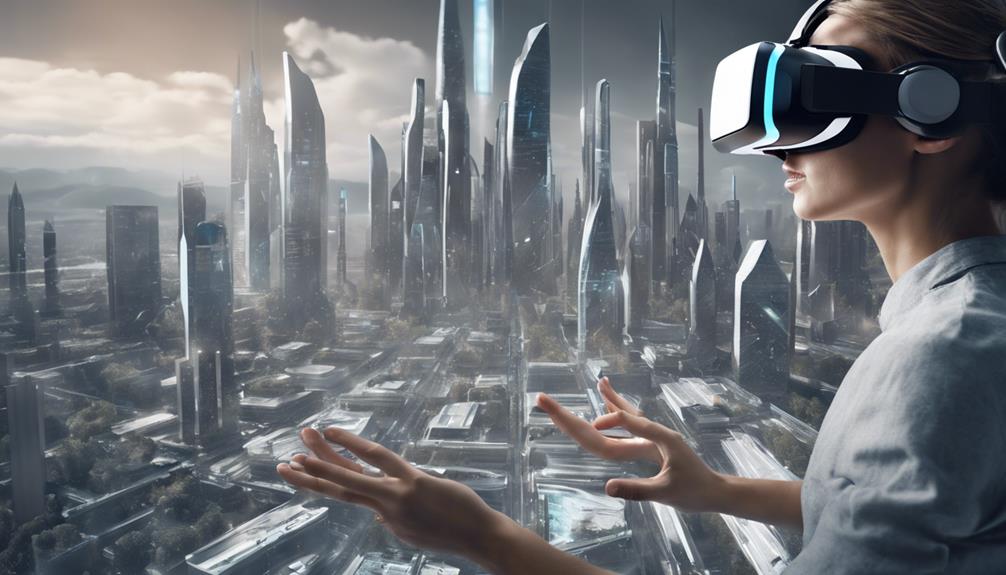
Virtual reality is transforming the architecture and design industries with innovative applications in virtual space planning and design visualization tools. Architects and designers can now create immersive, interactive models of buildings and spaces, allowing clients to experience and provide feedback on designs before construction begins. This technology enables professionals to make more informed decisions and refine their designs more efficiently.
Virtual Space Planning
In the domain of architecture and design, blueprints have long been the standard for planning and visualizing spaces. Nonetheless, with the rise of virtual reality (VR) technology, architects and designers can now create immersive and interactive virtual space plans that transform the way they work. Virtual space planning allows for the creation of realistic digital environments that can be explored and interacted with, enabling clients to experience and understand the design in a more intuitive way.
- Accurate measurements and scaling: Virtual space planning allows for precise measurements and scaling, reducing errors and miscommunications.
- Space optimization: Virtual space planning enables designers to test and refine different layouts and configurations to optimize the use of space.
- Material and texture exploration: Virtual environments can be used to explore different materials and textures, helping designers to make informed decisions.
- Stakeholder buy-in: Virtual space planning facilitates communication and collaboration among stakeholders, ensuring that everyone is on the same page.
Design Visualization Tools
Having transformed the field of architecture and design, design visualization tools now play a pivotal role in bringing creative visions to life. These tools have become crucial for architects, designers, and engineers, enabling them to communicate their ideas more effectively and make informed design decisions. By leveraging virtual reality (VR) and augmented reality (AR) technologies, design visualization tools provide photorealistic design previews, allowing users to experience and interact with their designs in a highly immersive and realistic environment.
Interactive design visualization is another key feature of these tools, enabling users to explore and manipulate their designs in real-time. This facilitates a deeper awareness of the design's functionality, usability, and aesthetics, ultimately leading to better design outcomes. Design visualization tools additionally facilitate collaboration among stakeholders, including architects, designers, engineers, and clients, ensuring that everyone is on the same page and that the final product meets the desired expectations. By streamlining the design process and improving communication, design visualization tools have become an indispensable part of modern architecture and design.
Virtual Reality in Marketing
Virtual reality is transforming the marketing milieu, allowing brands to create immersive experiences that captivate their audience. Companies are leveraging VR to showcase products in unique and interactive ways, such as virtual product demos that let customers explore and engage with products remotely. By incorporating 360-degree storytelling ads, marketers can convey their brand's message in a more engaging and memorable way.
Immersive Brand Experiences
Modern marketing strategies prioritize immersive experiences that engage consumers on a deeper level, and virtual reality (VR) is revolutionizing this space. Brands are now leveraging VR to create unique, memorable interactions with their target audience. Branded virtual experiences allow companies to showcase their products and values in an innovative and spellbinding way.
Some benefits of immersive brand experiences in VR include:
- Increased brand recall and recognition
- Improved customer engagement and loyalty
- Ability to collect valuable consumer data and insights
- Opportunities for creative storytelling and brand differentiation
Virtual reality retail is also on the rise, with many companies using VR to recreate in-store experiences online. This allows customers to explore products and interact with brands from the comfort of their own homes. As VR technology continues to advance, it’s likely that immersive brand experiences will become a fundamental part of marketing strategies across industries. By embracing VR, companies can stay ahead of the curve and build stronger connections with their customers. By providing unique experiences, brands can increase customer loyalty and drive long-term growth. In addition to virtual reality, augmented reality in retail is also transforming the shopping experience by allowing customers to visualize products in their own space before making a purchase. This technology enables shoppers to try on clothing, test furniture placement, or see how makeup looks in real time, enhancing confidence in their buying decisions. As both VR and AR continue to evolve, retailers that leverage these innovations will create more personalized and engaging experiences, ultimately driving higher customer satisfaction and sales.
Virtual Product Demos
As marketers continue to explore innovative ways to engage their target audience, they're finding that immersive brand experiences can be taken a step further. One way they're doing this is through virtual product demos, which allow customers to interact with products in a more engaging and memorable way. Virtual product showrooms are becoming increasingly popular, enabling customers to browse and explore products in a virtual environment that's both realistic and intuitive.
Interactive product demos are also being used to provide customers with a more in-depth perception of products. These demos can be used to demonstrate complex features and benefits, and can even be used to show how products work in different scenarios. By providing customers with a more immersive and interactive experience, marketers can increase engagement, build trust, and conclusively drive sales. Virtual product demos are revolutionizing the way companies market their products, and are fast becoming a key part of many marketing strategies. They're helping to bridge the gap between online and offline shopping experiences.
360-Degree Storytelling Ads
Immersive storytelling has become an essential element in riveting audiences, and marketers are leveraging degree storytelling ads to take it to the next level. This innovative approach to advertising is revolutionizing the way brands connect with their customers, allowing them to craft immersive experiences that simulate real-world environments. By utilizing 360-degree based storytelling, marketers can transport their audience into the heart of their narrative, cultivating deeper engagement and brand loyalty.
- Increased engagement: Interactive ads see higher click-through rates and conversion rates compared to static ads.
- Enhanced brand recall: Immersive storytelling experiences can improve brand recognition and recall by up to 25%.
- Better customer insights: Marketers can gain valuable insights into customer behavior and preferences through interactive ad analytics.
- Competitive advantage: Brands that adopt degree storytelling ads can differentiate themselves from competitors and establish a leadership position in their industry.
Advancements in VR Hardware
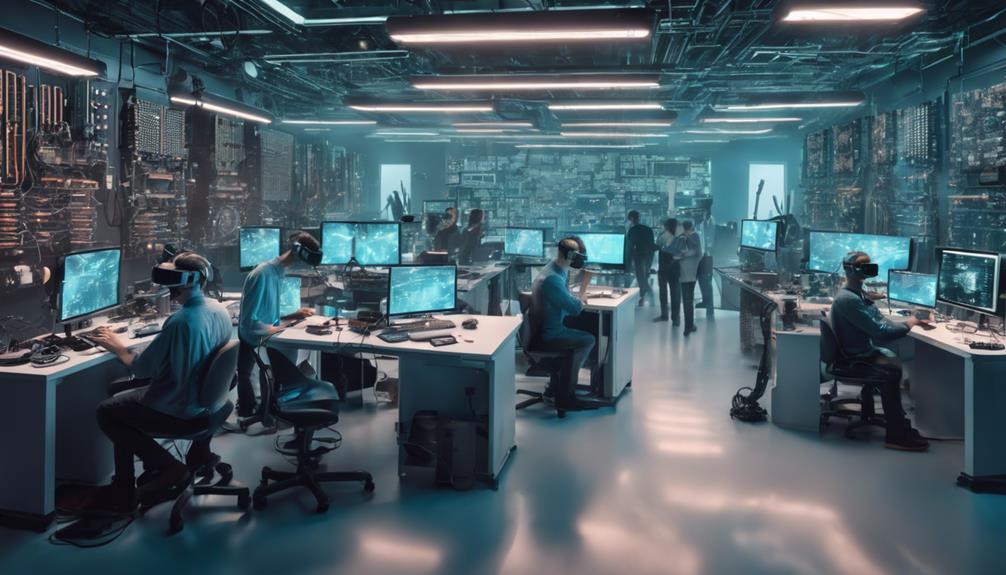
Recent breakthroughs in virtual reality hardware have markedly improved the overall VR experience. Advances in hardware portability have made it possible for users to enjoy immersive VR experiences anywhere, anytime. This has been achieved through the development of standalone headsets that don't require a PC or console to operate. These headsets are besides more convenient but also more affordable, making VR more accessible to the masses.
Another significant advancement in VR hardware is the focus on multi-sensory immersion. Newer headsets and devices are being designed to engage multiple senses, including sight, sound, and touch. This is achieved through advanced haptic feedback technology, 3D audio, and high-resolution displays. The result is a more realistic and engaging VR experience that simulates real-world sensations. In addition, advancements in eye-tracking technology have enabled more precise rendering and reduced latency, creating a more seamless and realistic experience. These hardware advancements have paved the way for more sophisticated VR applications and experiences that were previously unimaginable.
The Rise of Social VR
The rise of social VR is revolutionizing the way people connect and interact with each other. Virtual hangout spaces, immersive social experiences, and real-time connections are becoming increasingly popular, allowing users to engage with others in entirely new ways. As social VR continues to evolve, it's likely to play a significant role in shaping the future of online social interactions.
Virtual Hangout Spaces
As social media continues to dominate our online lives, it's no surprise that virtual hangout spaces have emerged as a key player in the rise of Social VR. Virtual community spaces have become increasingly popular, offering users a unique way to connect with others who share similar interests. These spaces provide a platform for people to socialize, collaborate, and participate in various activities, all from the comfort of their own homes.
Some key features of virtual hangout spaces include:
- Virtual collaboration tools that enable teams to work together on projects, share ideas, and communicate effectively.
- Customizable avatars that allow users to express themselves and showcase their personalities.
- Interactive environments that provide a sense of immersion and engagement.
- Access to a wide range of activities and events, from concerts to workshops.
Virtual hangout spaces have transformed the way we interact with others online, providing a more immersive and engaging experience than traditional social media platforms. As technology continues to evolve, it's likely that these spaces will become even more sophisticated, offering new and innovative ways for people to connect and interact with each other.
Immersive Social Experiences
Virtual hangout spaces have set the stage for more immersive social experiences, and it's here that Social VR truly comes into its own. Social VR enables users to interact with others in a more lifelike way, blurring the lines between physical and virtual interactions. Virtual community events, such as concerts, meetups, and conferences, are becoming increasingly popular, allowing users to connect with others who share similar interests.
These events provide a sense of presence and belonging, as users can engage in shared virtual experiences with others in real-time. Social VR also allows users to customize their avatars and environments, enabling a more personalized experience. This level of immersion cultivates deeper connections and encourages users to engage in more meaningful interactions. As a result, Social VR is revolutionizing the way people connect and interact with each other online. By providing a more immersive and interactive experience, Social VR is redefining the concept of community and social interaction in the digital age. This shift directed towards immersive social experiences is poised to have a lasting impact on the way we live, work, and interact online.
Connecting in Real-Time
Connecting in Real-Time
How quickly can users connect and interact with others online when they're in a real-time, immersive social environment? This question has sparked the development of social VR platforms that enable seamless communication and collaboration. These platforms allow users to engage in remote collaboration, catalyzing synchronous interactions that feel more natural and intuitive.
The benefits of social VR include:
- Enhanced communication: Virtual reality enables non-verbal cues like body language and facial expressions, making online interactions feel more authentic.
- Increased collaboration: Real-time interactions facilitate more effective teamwork and problem-solving.
- Improved engagement: Immersive environments keep users engaged and focused, reducing distractions and increasing productivity.
- New social experiences: Social VR platforms enable new types of social interactions, such as virtual events and meetups.
As social VR continues to evolve, it's likely to play a significant role in shaping the future of online communication and collaboration. By providing a more immersive and interactive experience, social VR platforms can help bridge the gap between physical and virtual interactions, making remote collaboration feel more like in-person collaboration.
VR in Mental Health Therapy
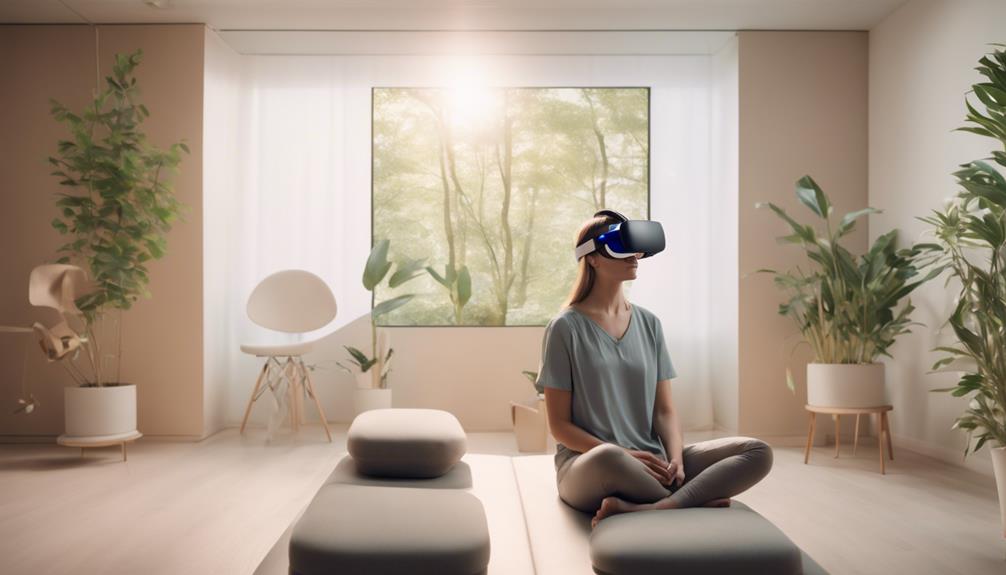
Mental health professionals are increasingly turning to innovative tools to bolster therapy sessions, and immersive technologies have proven particularly effective. Virtual reality (VR) is one such tool that has shown promise in treating anxiety disorders, post-traumatic stress disorder (PTSD), and other mental health conditions. By creating a controlled, simulated environment, VR can facilitate exposure therapy, allowing patients to confront and overcome their fears in a safe and manageable way.
VR can likewise be used to augment cognitive behavioral therapy (CBT), a type of talk therapy that helps patients identify and change negative thought patterns. In a VR environment, patients can engage in interactive exercises and simulations that help them practice new skills and behaviors, such as relaxation techniques and problem-solving strategies. Studies have shown that VR-based therapy can be just as effective as traditional therapy, with some patients even reporting improved outcomes. As VR technology continues to evolve, it's likely that its applications in mental health therapy will broaden, providing new and innovative ways to support patients on their path to recovery. VR's immersive nature has the potential to transform the field of mental health therapy.
Virtual Reality Industry Trends
Virtual Reality Industry Trends
Several notable trends are currently shaping the virtual reality industry, with many experts predicting significant growth in the coming years. As VR technology continues to advance and become more accessible, industry growth and consumer adoption are expected to increase. Key trends driving this growth include:
- Advancements in VR hardware: Improved VR headsets and controllers are enhancing the overall user experience, making VR more appealing to consumers.
- Increased investment in VR content: More developers are creating immersive VR experiences, from games to educational content, which is driving consumer adoption.
- Growth of enterprise VR applications: Companies are starting to adopt VR for training, collaboration, and other business purposes, opening up new revenue streams.
- Development of standalone VR devices: Wireless VR headsets are becoming more popular, offering users greater freedom and convenience.
As these trends continue to shape the virtual reality industry, experts expect to see significant growth in the coming years. With advancements in technology and increasing investment in VR content, consumer adoption is likely to rise, driving industry growth and innovation.
Frequently Asked Questions
Can VR Cause Eye Damage or Vision Problems?
She's wondering if prolonged use of VR can cause eye damage or vision problems. Research suggests it's possible, as VR headsets can lead to eye strain and increase headache risk. This is often a result of the device's proximity to the eyes and the intense visual stimulation. In contrast, most VR headsets are designed with safety features to minimize these risks, and taking regular breaks can additionally help mitigate potential eye problems.
Is VR Compatible With All Computer Systems?
The theory that VR is compatible with any computer system is misleading. In reality, she finds that VR systems require specific hardware requirements to function smoothly. For instance, they need a high-performance graphics card, a fast processor, and sufficient RAM. System compatibility is essential, as not all systems meet these requirements. She notes that compatibility issues often arise with lower-end systems or those with outdated hardware.
Can VR Headsets Be Used With Prescription Glasses?
She wonders if VR headsets can accommodate her prescription glasses. Fortunately, many modern VR headsets offer adjustable lens settings, allowing users to customize the focus to their needs. For those with more complex prescriptions, wearing contact lenses can in addition be a viable option. This way, she can enjoy immersive VR experiences without having to compromise on her vision. Manufacturers often take this into consideration when designing their headsets.
Are VR Experiences Suitable for People With Epilepsy?
It's ironic that immersive technologies, intended to bolster experiences, can be exclusionary for some individuals. For people with epilepsy, certain VR experiences can be problematic. They may trigger seizures owing to intense visuals, motion sickness concerns, or other stimuli. Furthermore, the impact on hearing can be a concern, as some VR devices require headphones that can alter or intensify sound. As a result, it's pivotal to consult a doctor before undertaking VR experiences.
Can VR Be Used to Treat Chronic Pain Conditions?
Researchers have been exploring the therapeutic applications of VR in pain management strategies. Studies have shown that VR can be an effective tool in reducing chronic pain by distracting patients from their discomfort. Through immersive experiences, VR can furthermore help individuals cope with anxiety and stress related to their pain. It's becoming a promising approach in treating chronic pain conditions, offering an alternative to traditional methods and improving overall well-being.